Biblical Studies
Unveiling, Not Apocalypse
The original title of the book does not mean destruction — it means exposure. A forensic investigation into what ἀποκαλύπτω actually communicates.
Leia mais
The original title of the book does not mean destruction — it means exposure. A forensic investigation into what ἀποκαλύπτω actually communicates.
Leia mais
When you read "God" in English, you assume one entity. The Greek codices use Θεός for multiple distinct beings. Forensic investigation of the multiplicity that translations collapse into a single word.
Leia mais
If the Dragon deceives the entire inhabited world, no system that claims biblical authority is automatically exempt. Including all of them.
Leia mais
Forensic dossier on the tetragrammaton יהוה, the loss of its original vocalization, the artificial hybrid "Jehovah," and the implications for identifying the Name in the Unveiling.
Leia mais
Forensic report on the semantic field of Πνεῦμα in the Greek códices and why the single translation "spirit" collapses radically distinct realities.
Leia mais
Forensic dossier on the distinction between Χριστός as a messianic title and as a proper name, and the implications for the definition of the anti-Χριστός in John.
Leia mais
Why "holy" in the Old Testament is not a moral attribute — it is a property mark of yhwh. And why Jesus washed the feet of the disciples as a direct response to Exodus 3:5.
Leia mais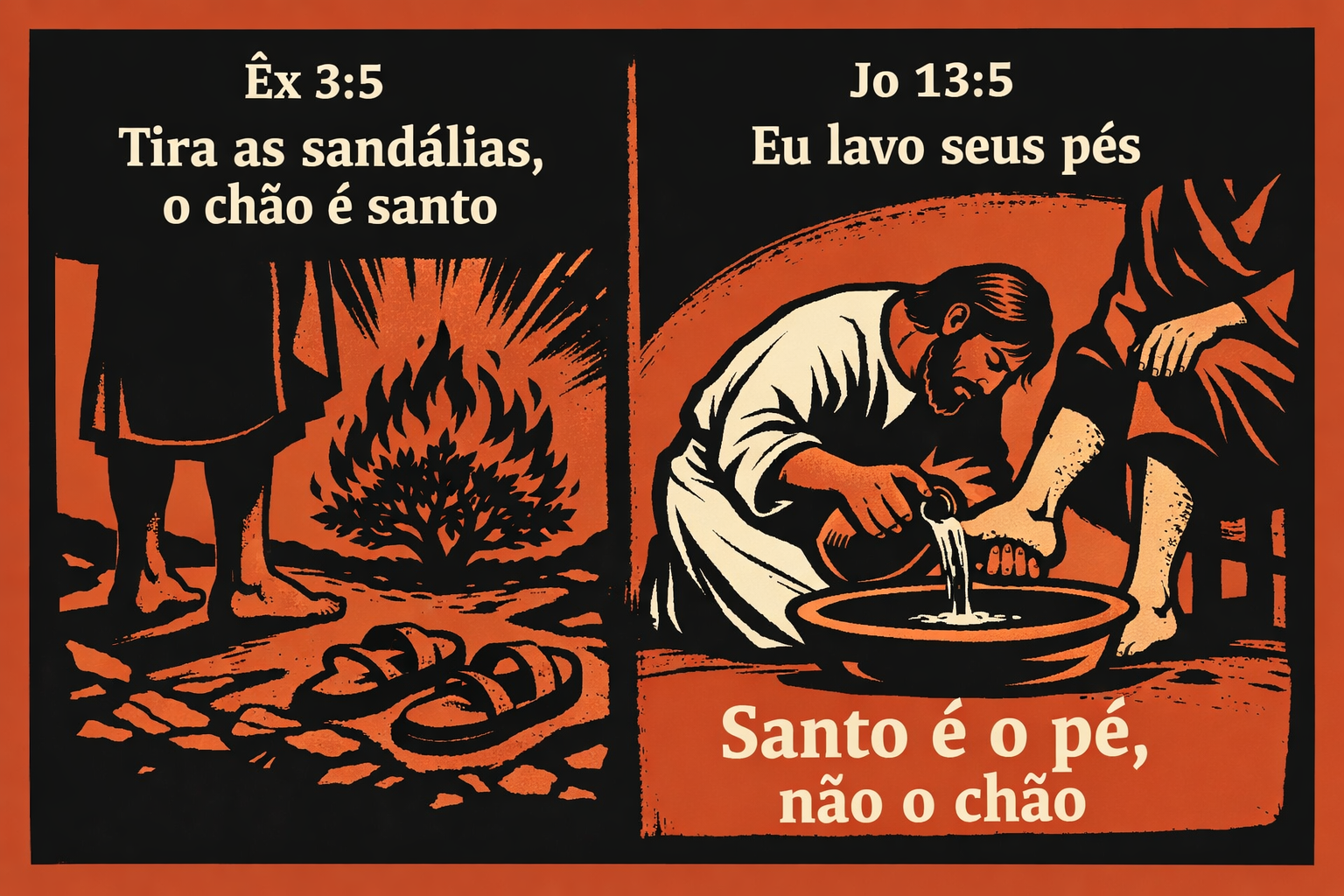
The Beast rises from the sea. The Angel steps on the sea. They are the same sea. And the attributes of the Strong Angel of Unveiling 10 coincide with those of Jesus in Unveiling 1 -- face like the sun, feet of fire, voice of a lion. Textual coincidence or forensic identity?
Leia mais
The question of Exodus 15:11 is the same as Unveiling 13:4. The Beast of the Sea is not a future mystery — it is an entity that Israel was already worshiping on the shores of the Red Sea.
Leia mais
How language models can perpetuate biased interpretations.
Leia mais